Many coaches know plenty of shooting drills, but a good session isn't a list of drills. It is a chain of decisions: who are your players? What do you want to fix? In what order does the session run? How do you make it feel like a game? And how do you know it worked?
In this article we walk through 5 decisions, then suggest a sample 30-minute session. The sample is our suggestion, built on well-known coaching sources and research, so adapt it to your players' age and to the number of balls and baskets you have.
Worked example
The five decisions:
- The group: who are your players?
- The goal: what do you want to fix?
- The order: in what sequence does the session run?
- The game: how do you bring it closer to game conditions?
- The log: how do you know it worked?
A 30-minute sample session, and what players do in each part.
01Decision one: who are your players?
A session that suits 16-year-olds won't suit 9-year-olds. Breakthrough Basketball ties the size and length of a workout to age and development. In its workout for ages 8 to 11, there are 5 to 15 minutes of ball handling, then 20 form shots from one spot, then 30 shots off a wall, then about 10 minutes of a fun drill such as HORSE. The site stresses that youth workouts should be fun.
FIBA's Level 1 coaching manual advises keeping things simple with beginners and giving them plenty of chances to practice. It suggests adapting the equipment, such as lower rings and smaller balls, and letting a ring hit count as a point for 7- and 8-year-olds.
02Decision two: what do you want to fix?
Don't start with the drill; start with observation. Watch how your players miss: short, long, or to the side? We collected miss patterns and their likely causes in common shooting mistakes and how to fix them.
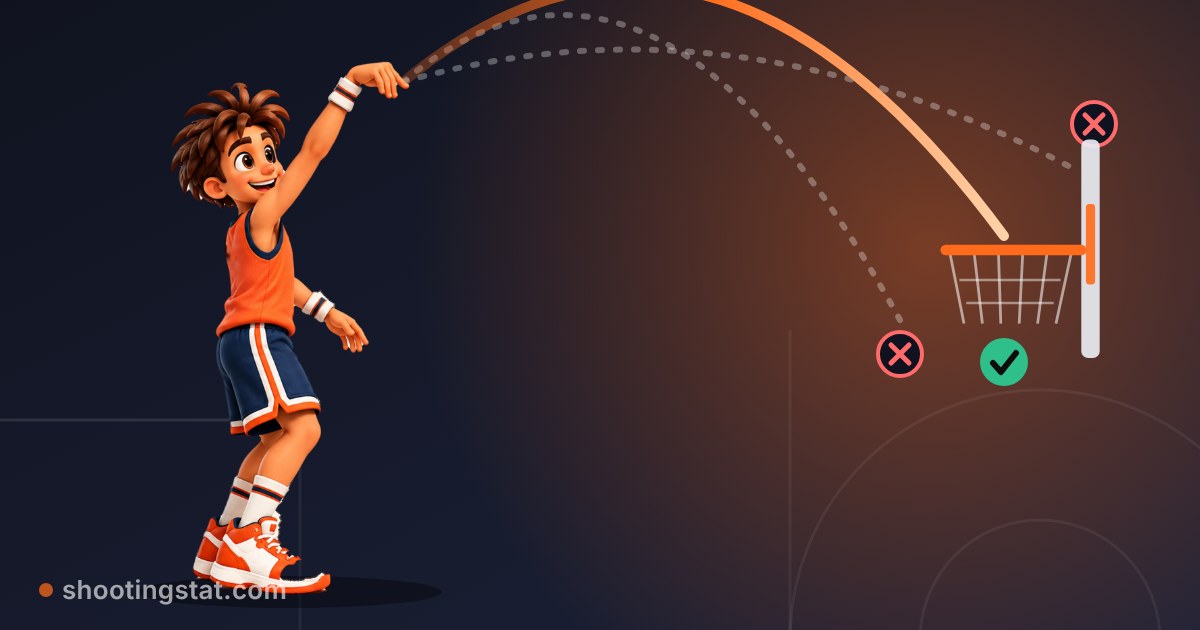
Then beware of changing too much. FIBA's manual cautions coaches against changing a player's technique just because it isn't textbook, and suggests identifying a few key changes, such as a higher arc instead of a flat shot, then letting the player work out how to get there. We suggest one change per player at a time, so you know what helped.
03Decision three: in what order does the session run?
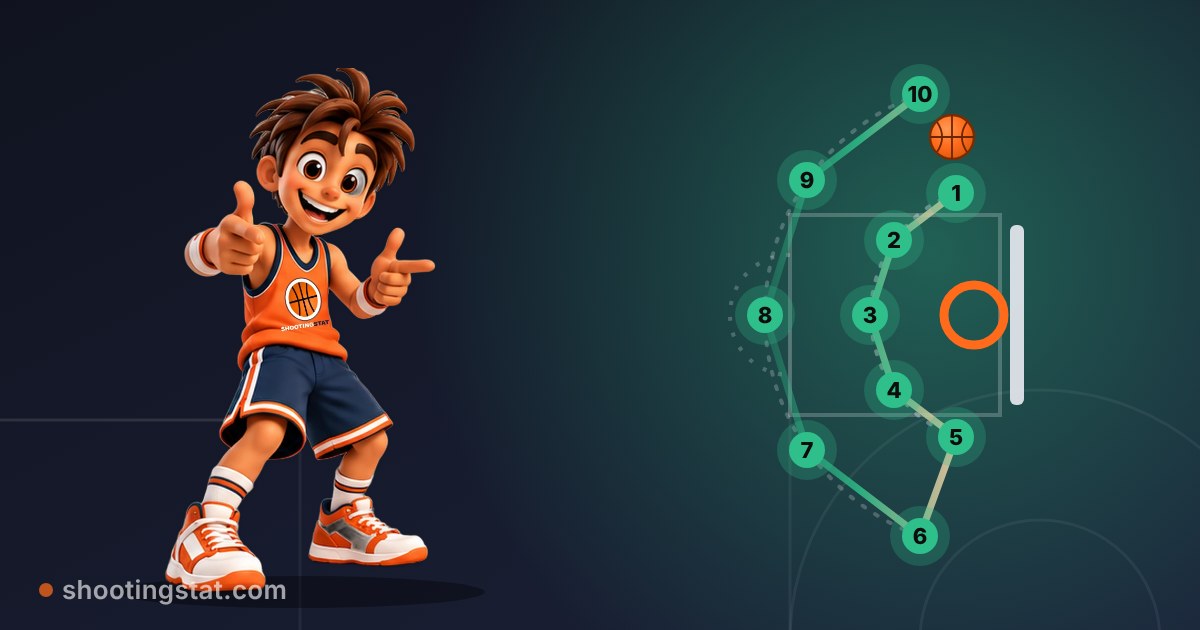
Start with form, then move between spots, then get closer to game conditions. That is the order of James Gels's individual workout on Coach's Clipboard: it starts close to the basket, moves out in stages, and places free throws between the stages. We covered it in a solo shooting session in 5 stages.
And don't judge a session by its results during practice alone. In a 2025 study of 84 novice female students, the group that repeated the same distance in blocks scored highest during practice, but was among the lowest in a retention test days later. The study is small and lasted only 3 days, but it gives a practical idea: vary the spots between stages, and test your players days later, not in the moment.
Put pressure and free throws at the end of the session, because players shoot tired in games. A 2025 meta-analysis found that moderate physical fatigue lowers two-point accuracy, and severe fatigue lowers both two-point and three-point accuracy. Coach's Clipboard places its team free-throw competition at the end of practice for exactly this reason, so players are tired.
04Decision four: how do you make it feel like a game?
Breakthrough Basketball warns about a common mistake: having the player shoot while the passer stands under the basket. The site says that in doing so you practice a different shot. It is better to have the player shoot after passes from the angles they come from in games: make a game-like cut, shoot, rebound, and pass back to the passer. That keeps footwork, body position and hand position the same in practice and in games.
Passing from under the basket still has its uses: warm-ups, building rhythm and confidence, or a fun finish. The site also suggests that a player shoots hard for about a minute while the passer recovers, then they swap. Likewise, Gels's drill calls for game-style jump shots, not flat-footed ones.
05Decision five: how do you know it worked?
Keep the number of attempts fixed in the parts you measure, and compare several sessions. With 10 attempts, a single shot moves the percentage by 10 points.
And don't settle for made or missed. FIBA's Level 3 manual says the score alone is not a reliable indicator of how well an offensive or defensive scheme is working, and suggests measuring other things, including where shots are taken and who takes them. In practice sessions, we suggest logging the location and type of each shot, which is what ShootingStat lets a coach do: log shots for a player and see their percentages by court zone.
Beware of early verdicts. An analysis of seven NBA seasons estimated that three-point percentage only stabilizes after about 750 attempts. That is an estimate from an analytics blog, so take it as an approximation, not a fixed number. Most players don't reach that many attempts in a full season, let alone a week. To understand what the percentages themselves mean, read the difference between the three percentages.
06A sample: 30 minutes
We assume every two players share a basket and a ball: one shoots while the other passes and rebounds, then they swap. The times and numbers are our own estimates, so adjust them to your group.
Worked example
The sample (about 65 shots per player before the pressure part):
- 5 minutes: one-handed close-range shots, 20 shots per player.
- 10 minutes: five spots with passes from game angles, 25 shots per player.
- 5 minutes: a shot after a cut or one dribble, 10 shots per player.
- 5 minutes: free throws in sets of two, 10 shots per player.
- 5 minutes: team pressure with an imaginary score.
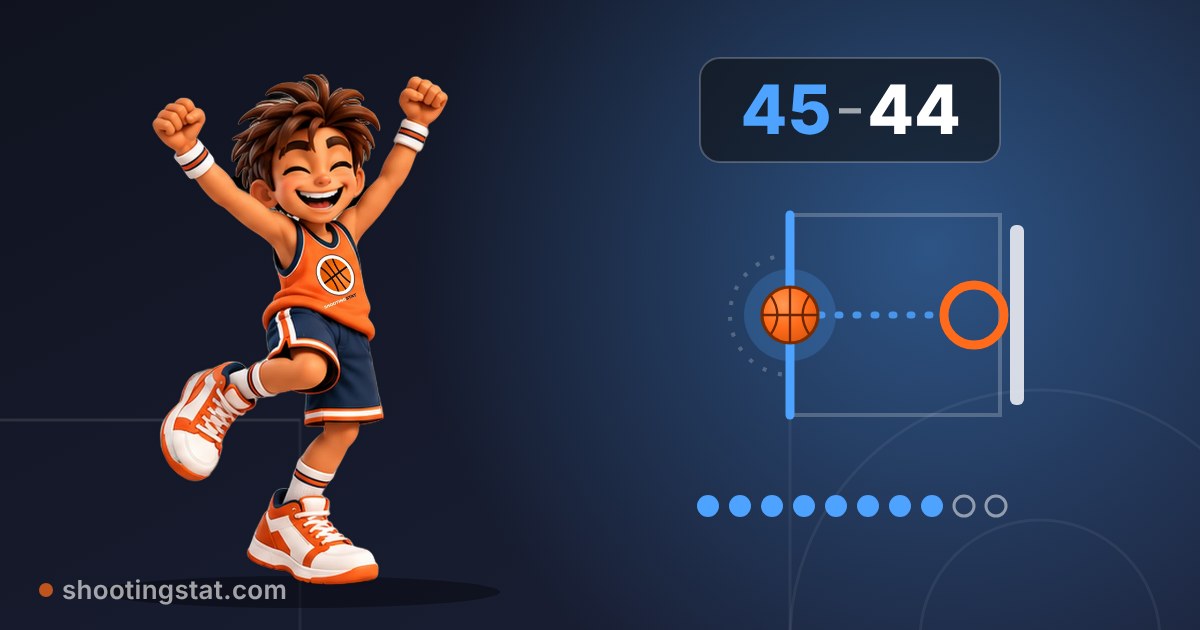
The last part is based on the Finish the Game drill from Coaching Toolbox. You put an imaginary late-game score on the board, such as your team leading 45 to 44. Each player shoots one free throw, and if it goes in, shoots a second one. Your team gets a point for every make, and the imaginary opponent gets two points for every miss. In the original, the losing team is punished with running or repeats the drill until it wins, and you can soften that. You'll find more ideas in free-throw drills.
07Summary
Start with your players' level, because the size of the session follows age.
Notice the miss pattern before you pick the drill, and change one thing at a time.
Start with form, vary the spots, and finish with pressure.
Pass from game angles, not from under the basket.
Keep attempts fixed, and log location, not just the result.
Try the sample with your group for two weeks, then adapt it to what you log.
FAQ
How many shots should I ask of each player in a session?
There is no single right number, because it depends on age and level. In its workout for ages 8 to 11, Breakthrough Basketball suggests 20 form shots and 30 shots off a wall, followed by a fun drill. Our sample has about 65 shots per player before the pressure part. Keep the number fixed from session to session so you can compare.
Should I change the shot of a player who succeeds with an unusual style?
There is no need to. FIBA's Level 1 coaching manual advises against changing a shot just because it isn't textbook, and suggests identifying a few key changes, such as a higher arc. We suggest one change at a time.
When can I say a player has improved?
There is no set number, but a small number of shots isn't enough. An analysis of seven NBA seasons estimated that three-point percentage only stabilizes after about 750 attempts. So compare several sessions with a fixed number of attempts, and don't judge from one week.
Is it enough to log makes and misses?
No. FIBA's Level 3 manual recommends measuring where shots are taken and who takes them, not the score alone. Log the location and type of each shot, which ShootingStat lets you do by court zone.